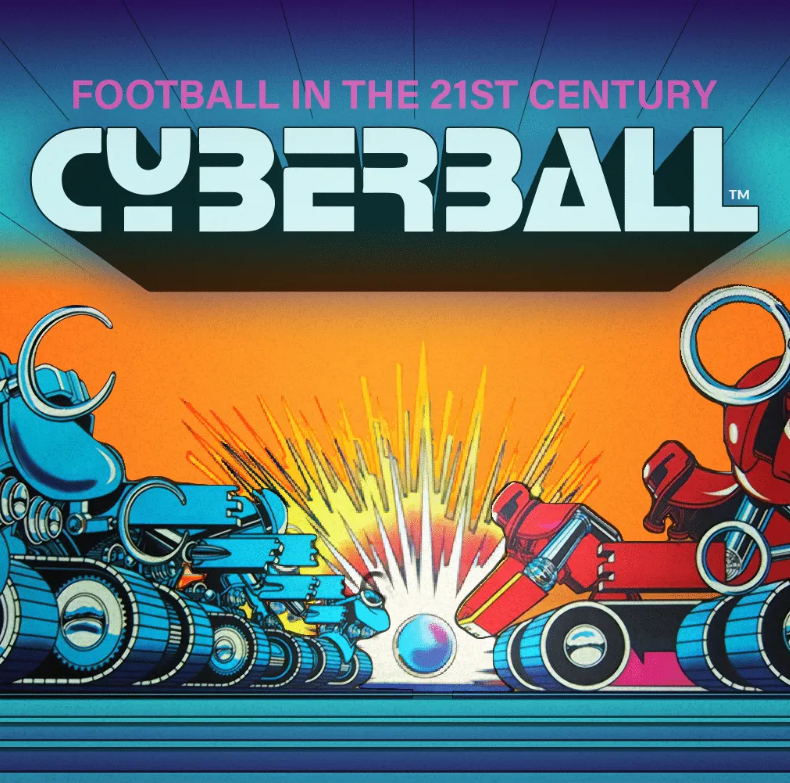
Sounds from a late 1980s / early 1990s arcade: the metallic clash of robot against robot, the electronic whine of a bomb heating toward detonation, the clink of quarters dropping into a machine. For me, those sounds belonged to Cyberball, glowing in a neighborhood Putt-Putt Golf and Games on Sheridan Drive in Tonawanda, just outside Buffalo, New York.
My high school friends Jim and Eric were regulars there. They were good, but God and Rob were better. (God earned his nickname while studying to become a mortician, and the name stuck.) Jim and Eric kept improving until one night they finally unseated the reigning champions. I'd rotate in occasionally, corner blitzing every play I could.
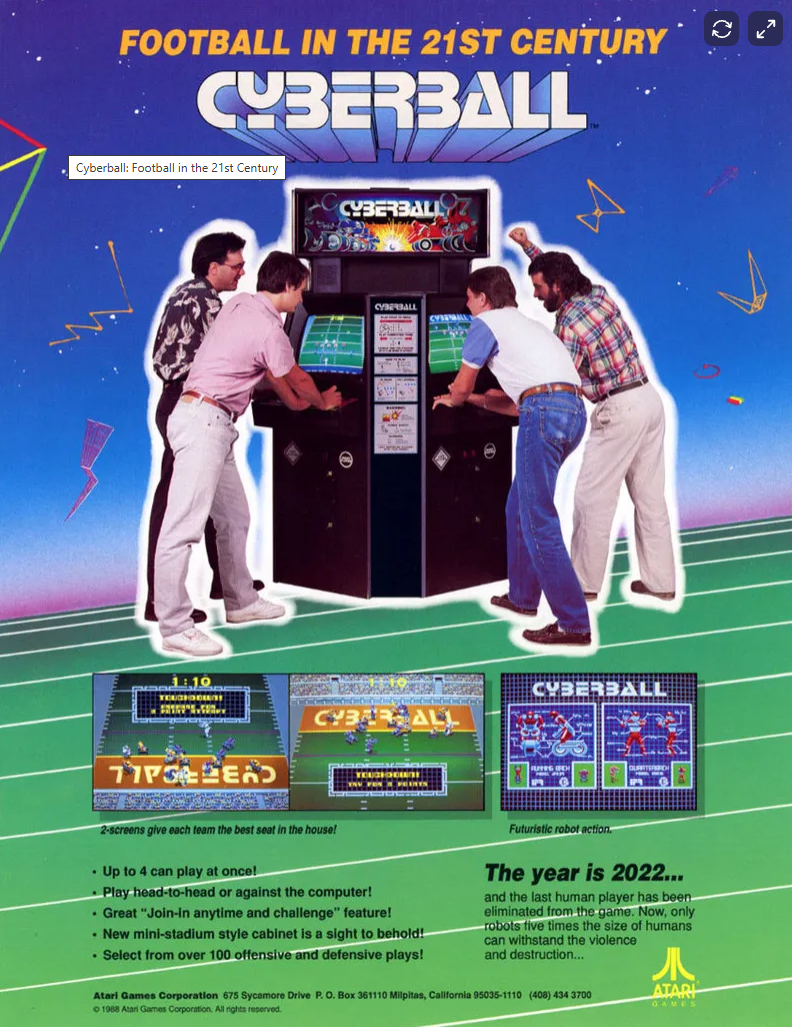
In September 1988, Atari released Cyberball, imagining the sport's future in the year 2022, where athletes had long since been replaced by robots. In this version of football, seven-robot teams competed with a 350-pound ball that doubled as a bomb, heating from cool to critical. Hold it too long, and your robot player went up in smoke.
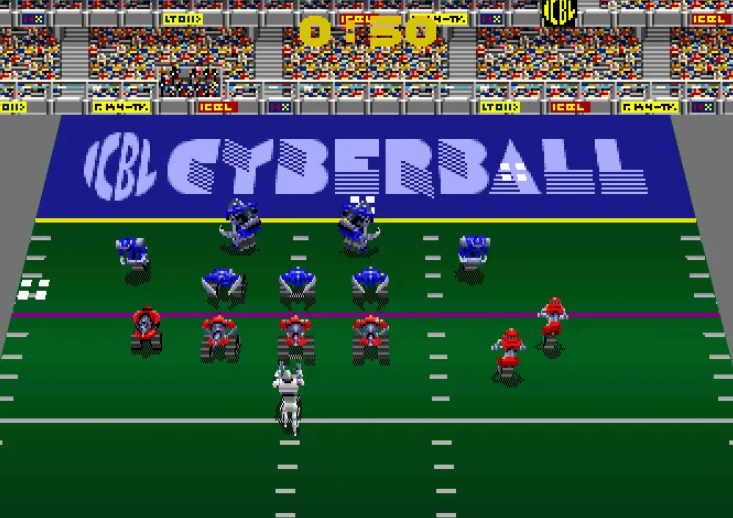
The game was developed by a team led by programmer John Salwitz and artist Dave Ralston. Salwitz would later contribute to Command & Conquer and Medal of Honor, while Ralston stayed on at Atari before moving to other studios. Together they created an arcade game experience that merged sports, science fiction, and strategy in a new way.
The Cyberball arcade machine was a dual-monitor cabinet that supported four players at once, making the game a social gathering place for gamers. Players developed layered strategies: disguising formations, faking handoffs, and upgrading their robot rosters from plastic to titanium. On defense, turbo bursts were timed with precision to break up passes or deliver devastating tackles.
Years later, when I conceived a story about a quarterback trying to prove humanity still matters in a sport dominated by machines, my first thought was of Cyberball… and beating the blitzing corner.